Is a Tankless Water Heater Worth the Cost in Seattle?
Deciding on a new water heater in the Pacific Northwest involves more than just picking a unit that fits in your basement. In Seattle, where utility rates are evolving, and the cost of living remains high, homeowners are increasingly asking if the “unlimited” promise of a tankless system is worth the higher upfront investment. While the idea of never running out of hot water on a rainy January morning is enticing, our local climate and energy landscape create unique pros and cons.
In this guide, we will assess the true value of a tankless water heater in Seattle to determine whether it is a smart investment for your home in 2026.
The Space-Saving Premium in Seattle Homes
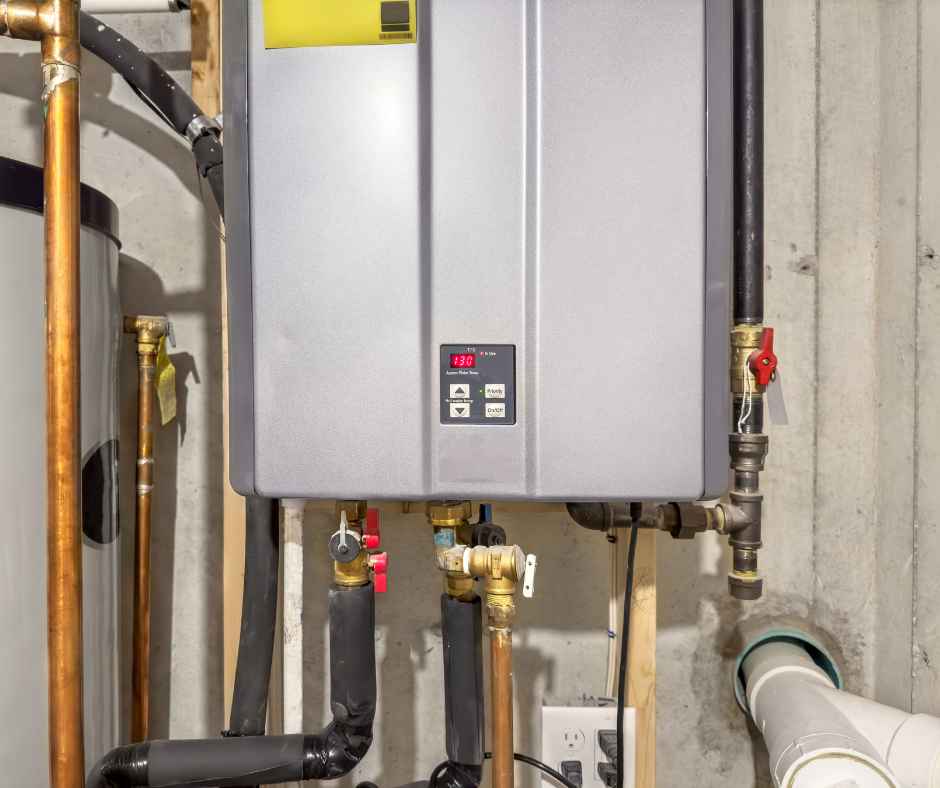
In a city where real estate is at a premium, every square foot of your home has a tangible dollar value. Traditional storage tanks are bulky, often occupying a 10-15-square-foot footprint in a closet, utility room, or basement. A tankless unit, by contrast, is about the size of a carry-on suitcase and mounts directly to the wall. For homeowners in smaller Craftsman-style houses or modern townhomes in neighborhoods like Ballard or Capitol Hill, reclaiming that floor space can be a game-changer.
Reclaiming this space does more than just make your utility room look better; it can actually increase your property value. Real estate data for the Seattle market in 2026 suggests that converting a dedicated “water heater closet” into usable storage or a small pantry can significantly increase buyer appeal. When you are paying for every inch of your home, replacing a “tank of standing water” with a wall-mounted system is one of the most effective ways to optimize your floor plan.
- Reclaimable Footprint: Moving to a tankless system typically frees up enough space for a new shelving unit or additional storage.
- Flexible Installation: Because they are wall-mounted, tankless units can be placed in areas where a traditional tank simply wouldn’t fit.
- Modern Aesthetic: A sleek, wall-hung unit contributes to a more “finished” and updated look in your utility area.
- Resale Value: Modern energy-efficient upgrades are highly attractive to Seattle buyers who prioritize sustainability and low operating costs.
By treating your utility space as valuable real estate, the “cost” of the tankless unit starts to look more like an investment in your home’s usable square footage. For many Seattle residents, the ability to turn a cramped closet into a functional storage space is often enough to tip the scales in favor of tankless technology.
Performance in the PNW: The Groundwater Factor
One of the most important considerations for a Seattle tankless system is our groundwater temperature. Because much of our water comes from mountain-fed sources like the Cedar River or the Tolt River, the water entering your home in the winter can be as cold as 4°C to 7°C (40°F to 45°F). A tankless heater must raise that temperature to roughly 49°C (120°F) instantly. This “temperature rise” is a significant hurdle that requires a properly sized, high-BTU unit to ensure your shower does not turn lukewarm when you turn on the kitchen sink.
- High-Capacity Requirements: Seattle homes typically require a higher GPM (gallons per minute) rating to handle the significant temperature drop during the winter months.
- Consistent Flow: A professionally sized unit ensures that even with cold-water intake, you can run multiple fixtures simultaneously without a drop in temperature.
- Unlimited Hot Water: Unlike a tank that eventually runs dry during long showers, a tankless unit provides hot water for as long as the tap is open.
- Energy Efficiency: Because it only heats water on demand, you are not paying to keep 50 gallons of water hot while you are at work or asleep.
A cheap, undersized unit might work fine in a warmer climate, but in the Pacific Northwest, it will struggle to keep up with a family’s morning routine. Choosing a high-performance model ensures that you get the full “endless hot water” experience even on the coldest day of the year.
The 2026 Financial Breakdown: ROI and Rebates
While the initial installation of a tankless system is higher than that of a standard tank, the 2026 financial landscape in Washington offers several ways to offset that cost. In Seattle, homeowners can leverage federal tax credits and local utility rebates to make the transition more affordable. Under the Energy Efficient Home Improvement Credit (Section 25C), you may be eligible for a federal tax credit of 30% of the project cost, capped at $600, for a high-efficiency natural gas tankless unit. If you choose an electric heat pump water heater instead, that credit can jump as high as $2,000.
Local utilities are also aggressive with their incentives. As of early 2026, Seattle City Light offers rebates of up to $250 for qualifying natural-gas tankless water heaters. If you are a Puget Sound Energy (PSE) customer, you can receive a post-purchase rebate of $500 for units with a Uniform Energy Factor (UEF) of 0.87 or higher. When you combine these instant savings with the fact that tankless units are between 24% and 34% more energy-efficient than traditional tanks, the “payback period” becomes significantly shorter for the average Seattle household.
- Federal Tax Credits: Claim up to $600 for a gas tankless or up to $2,000 for a heat pump model on your 2026 tax return.
- Utility Rebates: Stack local PSE or Seattle City Light rebates to lower your out-of-pocket installation costs.
- Monthly Energy Savings: High-efficiency units eliminate “standby heat loss,” potentially saving a typical family hundreds of dollars per year.
- Long-Term Value: Because tankless systems last 20+ years, you avoid the cost of a second tank replacement midway through the system’s life.
By choosing a system that meets the highest efficiency tiers, you aren’t just saving money on your monthly bill; you are significantly reducing the total cost of ownership over the next two decades. For most Seattle homeowners, these combined incentives make the 2026 upgrade to tankless a clear financial winner.
Longevity and Maintenance in a Damp Climate
One of the key selling points of a tankless system is its long lifespan. While a traditional storage tank in Seattle typically lasts 8 to 12 years before corrosion sets in, a well-maintained tankless unit can easily reach 20 to 25 years. This longevity stems from the fact that tankless systems do not store water, eliminating the constant risk of a tank rusting from the inside out. However, achieving this two-decade lifespan in the Pacific Northwest requires a commitment to routine care.
Seattle’s water is relatively soft compared to other regions, but it still contains enough dissolved minerals to cause scale buildup in your unit’s delicate heat exchanger. Additionally, our damp, humid climate can affect units installed in unconditioned spaces such as garages or attics. Excess moisture can cause condensation or corrosion of electrical connections. At As You Wish Electric, Plumbing, Heating & Air, we recommend a professional descaling and system “physical” at least once every two years to keep your system running at peak efficiency.
- Descaling the Heat Exchanger: Flushing the system with a specialized solution removes the mineral “crust” that can otherwise cause the unit to overheat or fail.
- Filter Cleaning: Tankless units have an inlet filter to capture sediment; if it becomes clogged, your water pressure will drop significantly.
- Venting Inspection: In our rainy climate, it is vital to ensure that your intake and exhaust vents are clear of debris, nests, or seasonal blockage.
- Component Health Checks: Regular inspections of the ignition system and sensors prevent minor errors from turning into a complete loss of hot water.
By staying on top of these simple maintenance tasks, you protect your investment and ensure that your system remains under warranty. Most manufacturers require proof of regular maintenance to honor their 15- to 20-year heat exchanger warranties. When you factor in the extended life of the unit and the reduced risk of a catastrophic flood from a burst tank, the long-term reliability of a tankless system becomes a major part of its “worth” in the Seattle market.
Making the Right Choice with As You Wish Electric, Plumbing, Heating & Air
At As You Wish Electric, Plumbing, Heating & Air, we understand that every Seattle home is unique. Whether you are living in a historic home in Queen Anne or a new build in Shoreline, we take a holistic approach to your home’s comfort. We don’t just look at the price of the unit; we look at your family’s usage patterns, your home’s electrical capacity, and your long-term financial goals. Our team is dedicated to providing “Best-in-Class” service, ensuring that your transition to tankless is seamless and stress-free.
Choosing a new water heater is a big decision, but you don’t have to make it alone. From navigating 2026 tax credits to performing precision installations that maximize your square footage, we are here to help. Our goal is to provide you with a system that not only works but also works for the way you live in the Pacific Northwest. Experience the peace of mind that comes with “Making a Wish” for better home comfort and seeing it come true with our expert team.
Ready to find out if tankless is the right fit for your Seattle home? Contact As You Wish Electric, Plumbing, Heating & Air today to schedule your professional home assessment!
Frequently Asked Questions
Does a tankless water heater take longer to get hot water to the tap?
It can take a few extra seconds for the unit to heat up and push the water through the pipes. This is often referred to as “the cold water sandwich.” We can install a small recirculation pump to ensure you get instant hot water at every faucet if that is a priority for you.
Will I need to upgrade my electrical panel to go tankless?
If you are switching to an electric tankless unit, the answer is often yes. These systems require significant power. However, many gas tankless units only need a standard 120V outlet to power the control board and ignition.
Can a tankless unit be installed outdoors in Seattle?
Yes, but it must be a model specifically designed for outdoor installation with built-in freeze protection. While it saves even more indoor space, we often recommend indoor or garage mounting to protect the unit from our persistent damp weather.
Is the water really “endless”?
Yes. As long as you have a fuel source (gas or electricity) and a water supply, the unit will continue to heat water. You could technically shower for three hours, and the water would remain at the same temperature.
What is the “Minimum Flow Rate”?
Tankless heaters need a certain amount of water moving through them to “trigger” the burners, usually about 0.5 gallons per minute. If you are just trickling a faucet to wash your hands, the heater might not turn on.